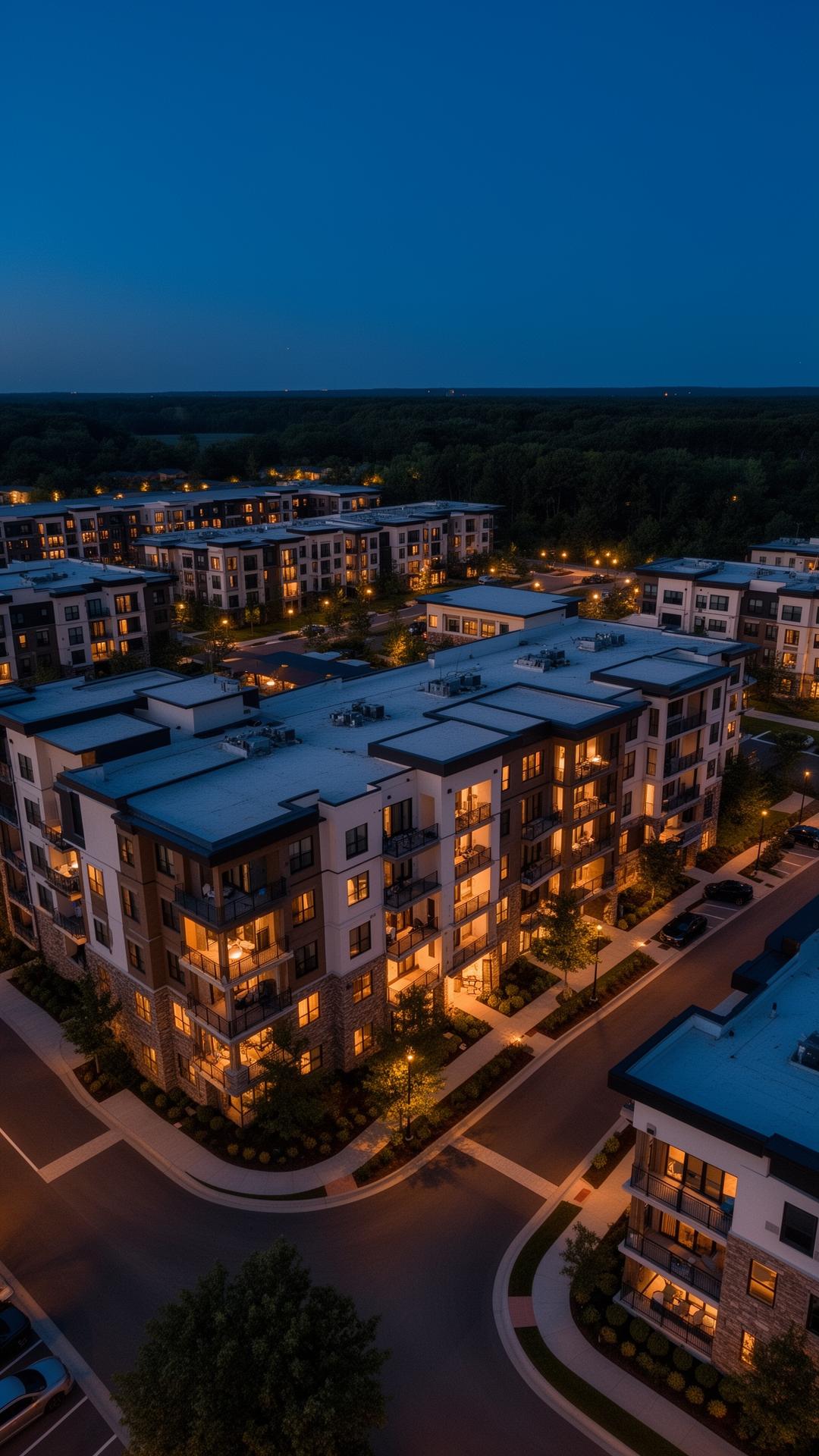
Gated Community vs Standalone Apartment: Which Suits You?
Evaluate apartment formats through the facilities you will use, operating arrangements, recurring costs and the actual unit available.
In this guide
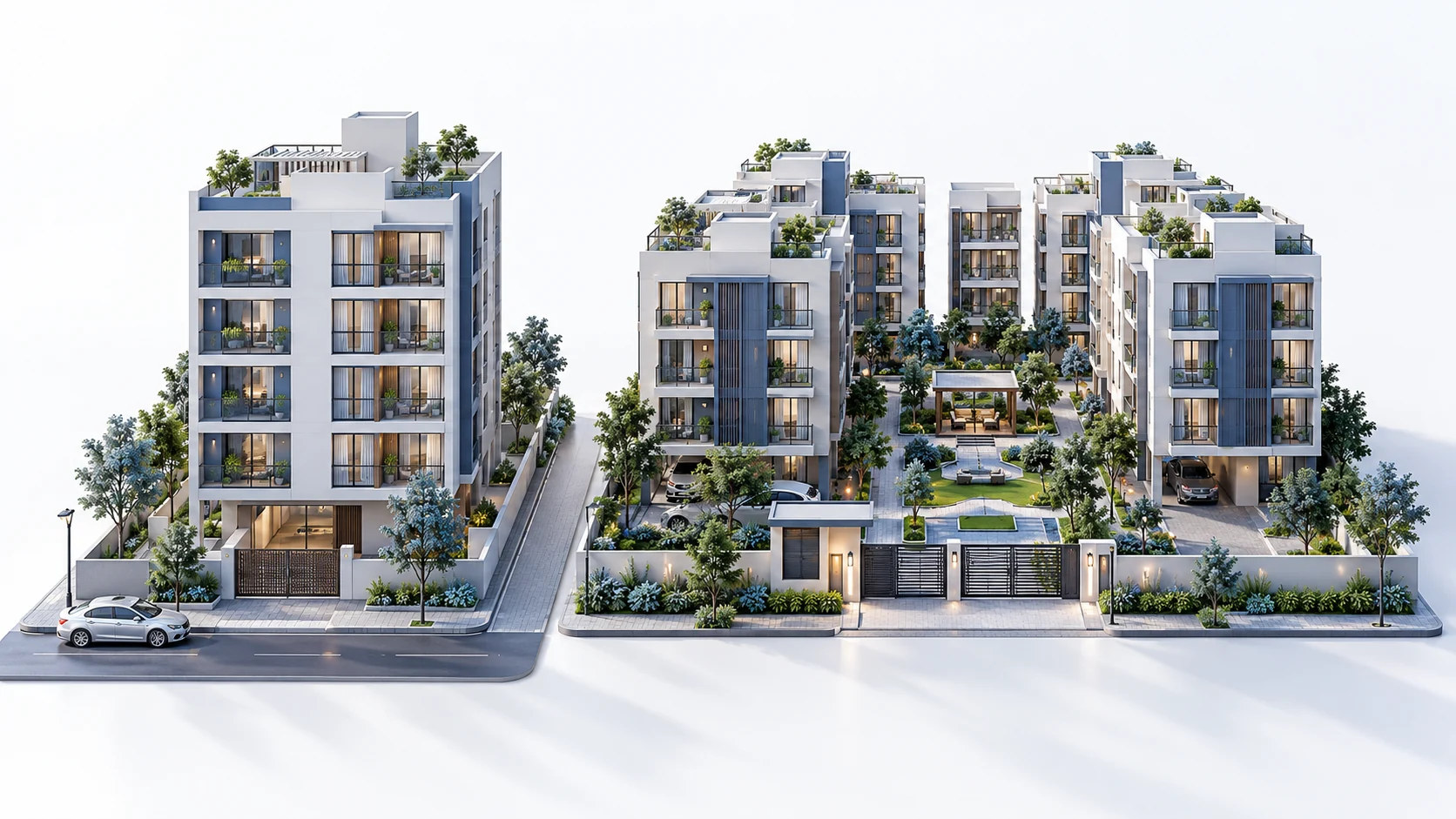
A gated community and a standalone apartment building organise shared living differently. The better fit depends on which facilities you will use, how you want the building managed and what the specific property delivers for its complete cost.
For buyers comparing gated communities and standalone apartments in Hyderabad, start with actual projects. Size and labels cannot guarantee security, privacy, maintenance quality or value.
Compare a normal week in each home
Imagine the same weekday in both properties. How do you reach your car or taxi? Can a child reach a play area without crossing vehicle traffic? Where does a delivery arrive? How far must an elderly resident walk from the entrance to the lift?
A larger community may provide several shared destinations within its boundary. Those facilities can be convenient if they match your routine. They may offer little personal value if you rarely use them or if their operating hours do not suit you.
A standalone building may place you closer to existing shops, services or family. It may also require you to use facilities outside the building. Check the neighbourhood route and availability rather than assuming this is either convenient or inconvenient.
The comparison is about the complete daily arrangement, including what lies beyond the gate.
Inspect management and operating resilience
Ask who currently manages maintenance and who will take responsibility after handover. Review the scope of service, budget assumptions and the process for handling repairs or resident complaints.
For both formats, investigate water arrangements, lift servicing, power backup, fire-safety provisions, waste handling and emergency access. Request relevant records and professional verification where needed. A large security desk does not establish that all procedures are effective; a small resident group does not guarantee quick decisions.
In an occupied building, speak with residents about service consistency and recurring issues. Treat individual experiences as leads to investigate rather than proof that the whole building performs one way.
Compare maintenance through the service scope
An apartment maintenance comparison should begin with what the charge includes. Two monthly figures can cover different services or allocate costs differently.
Ask whether the figure includes water, backup-power usage, facility operation, management fees and reserves for major repairs. Clarify which charges depend on consumption and which are shared. For a new project, request the assumptions behind the estimate and the period it covers.
Lower charges may reflect fewer facilities or deferred expenditure. Higher charges may support valuable services, or services you do not need. Neither amount is a quality measure on its own.
Calculate the annual commitment and consider whether you could absorb a reasonable increase. Shared assets such as lifts, pumps and generators need ongoing care in both formats.
Examine privacy, movement and shared demand
Standalone buildings can have fewer households, but privacy still depends on doors, windows, adjoining construction and circulation. Large communities can offer generous outdoor areas while particular towers or units remain busy.
Inspect the specific floor and unit. Look at lift access, corridor traffic, opposite windows, vehicle routes, amenity noise and service areas. The home facing the clubhouse may feel lively to one household and distracting to another.
Use density as a descriptive input, then examine distribution. The number of units per acre does not capture tower spacing, the size of homes or how residents use common facilities.
Use the same evidence for both formats
| Comparison question | What to obtain |
|---|---|
| Does the home suit the household? | Exact floor plan and unit position |
| What is the complete acquisition cost? | Written quote with inclusions and exclusions |
| What will shared living cost? | Maintenance scope, estimate or available accounts |
| How will essential services work? | Operating arrangements and relevant records |
| Are the transaction and building documents satisfactory? | Independent review of applicable documents |
Do not infer that a small development is exempt from every registration or approval requirement. Ask what rules apply to that specific property and have the basis independently checked. A gated boundary also does not turn the purchase into a fully verified transaction.
Decide which compromises are acceptable
A family that will regularly use onsite recreation and values a range of shared spaces may prefer a suitable community. A household that wants a particular established street, needs fewer common facilities and accepts a smaller management setup may prefer a suitable standalone building.
These are buyer profiles, not promises about either format. The exact unit, service arrangements and neighbourhood can change the answer.
Write one sentence for each finalist: “We would use these benefits regularly, accept these limitations and can afford these recurring costs.” If that sentence is difficult to complete, investigate the missing part before deciding. Then use the gated-community evaluation or unit-selection guide for a closer inspection.