Apartment Site Visit Checklist: What to Check Beyond the Model Flat
Plan a focused site visit, record what you observe and separate documented answers from verbal statements and unresolved questions.
In this guide
A productive site visit answers questions you could not settle from the listing, quotation or drawing. Arrive with the exact unit details and a short investigation plan. Leave with observations, supporting material and a clear list of what remains unverified.
Hyderabad buyers can adapt this apartment site visit checklist for a completed home or an under-construction project. The visit helps assess suitability; it does not replace a technical inspection or independent document review.
Before the visit: identify the home and the questions
Request the available unit number, current floor plan, location within the tower and written quotation. Ask what you will be permitted to inspect: the actual unit, a similar unit, a model flat or only the sales area.
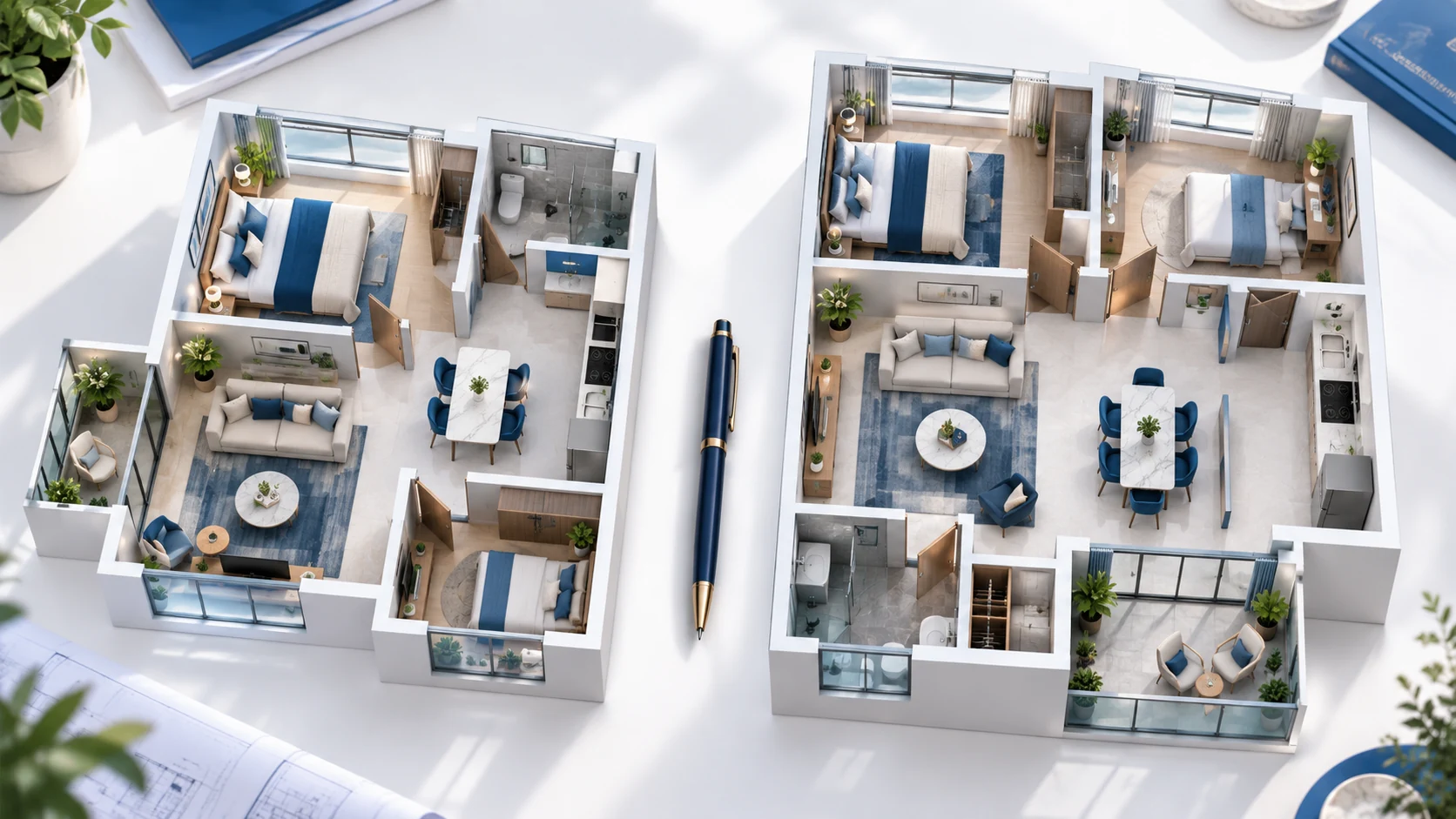
Review the plan against your household's requirements. Note the rooms, routes or openings you need to test. Bring relevant furniture dimensions and a way to record measurements, photographs and notes where permitted.
Schedule the journey at a useful time. If commute or road noise is a deciding factor, a quiet weekend visit alone will not answer the question. Agree safe site access and follow the site's safety arrangements.
On arrival: inspect the route before the presentation
Observe the final approach road, entrance, turns and surrounding activity. Consider how you would enter and leave during your normal routine. Note pedestrian conditions, road crossings and the route to nearby daily needs.
Look for signs that warrant further questions, such as water marks, ongoing drainage work or difficult access. A dry-day visit cannot establish monsoon performance. Ask for relevant records, local experiences and clarification of any observed issue.
Distinguish the locality's wider connectivity from the project's actual entrance. Record what you saw and when, rather than a general impression that the location is good.
Inside the home: test use before finishes
Confirm that the unit or model matches the configuration being offered. Ask which dimensions, fittings, finishes and ceiling treatments are standard and which are display upgrades.
Walk the route from entry to living, bedrooms, kitchen, bathrooms and utility. Check furniture placement, doors and usable circulation. Inspect windows and balconies in relation to neighbouring buildings and sources of activity.
Observe daylight without relying on decorative lighting where possible. Ask about exhaust and ventilation arrangements. For a completed home, look for visible defects such as damp patches, cracks, damaged finishes or drainage concerns, and obtain a qualified inspection where needed.
Do not diagnose structural safety from appearances. Record concerns for a competent professional to assess. Avoid operating equipment or entering unfinished areas without permission and supervision.
Around the building: check the shared experience
Trace the route from parking or the entrance to the front door. Check levels, steps, lift access and the distance involved for household members with mobility needs.
Observe corridors, service areas, waste handling and the relationship between pedestrians and vehicles. Ask about water, power backup, lift maintenance and emergency arrangements, with relevant records for independent review.
For shared amenities, establish what is operational, what is included in your purchase and what depends on later construction. Note likely noise or activity near the candidate unit. A quiet empty community does not reproduce full occupancy.
Ask questions that produce verifiable answers
| Question | Useful evidence |
|---|---|
| What exactly does this price buy? | Unit-specific cost sheet and inclusions |
| Which parts are standard? | Specifications and documented upgrades |
| When can this home be occupied? | Agreement terms, current status and applicable documents |
| Which amenities belong to this phase? | Phase plans and written scope |
| What will maintenance cover? | Estimate or budget with service scope |
| What remains under construction nearby? | Current plan and schedule, with assumptions identified |
| What happens if we cancel? | Written booking, refund and cancellation terms |
Ask for documents through the proper channel. A verbal answer can guide the next step, but important purchase commitments should be consistent with the written offer and agreement.
After the visit: separate observation from interpretation
Write notes while the details are fresh. “Traffic was audible in the bedroom at 6 pm with the window open” is more useful than “too noisy.” “The wardrobe and door conflict on the plan” is more useful than “bad layout.”
Classify each point as observed, documented, stated verbally or still unknown. Record the date and exact unit. That makes comparisons more reliable when you visit several homes over different weekends.
Choose the next action for each unresolved issue: a targeted revisit, written clarification, document review or technical inspection. Avoid paying to hold a unit merely because the visit felt positive before understanding the booking terms.
Use the project comparison guide to compare the shared environment and the floor-plan guide to investigate unit details. A good visit reduces uncertainty about the decision you are actually making.
Continue with the next decision
Your visit, one step at a time.
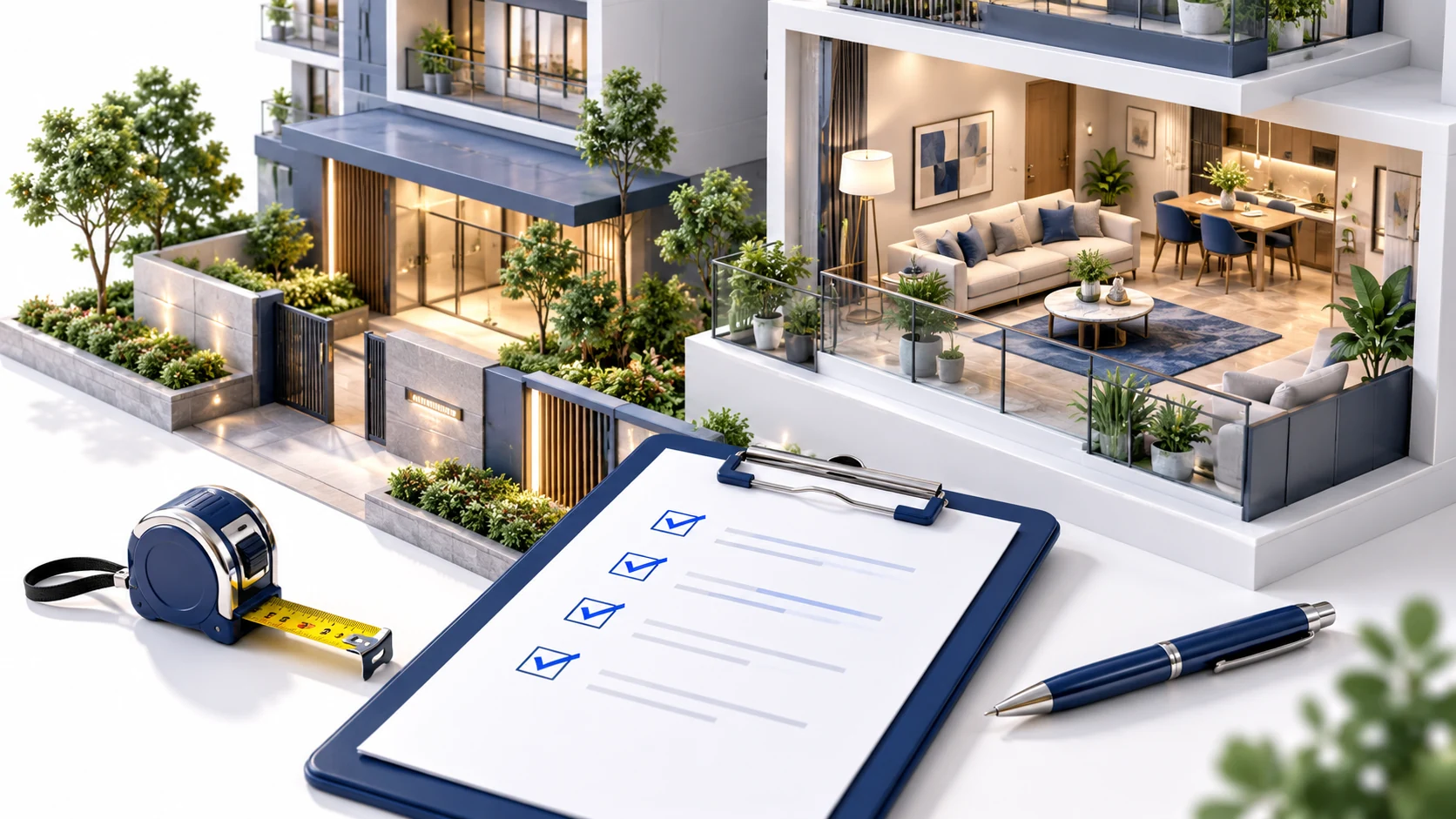
A tick records what you reviewed; it does not certify the property. These temporary selections reset when you reopen the page.